
Lebanese Academic / الأكاديمي اللبناني
The country, not the crisis.
The country, not the crisis.البلد، لا الأزمة.Beirut · Levant · Diasporaبيروت · المشرق · المهجر

Publishing writing that decodes power and preserves memory.

نُصدِر كتابةً تُفكّك السلطة وتصون الذاكرة.

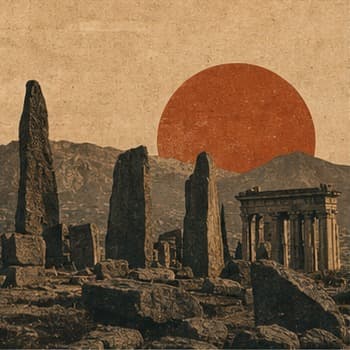
Nahr el-Kalb inscription wall in Lebanon.
Heritage, Memory, and Place Strategy

Stones are not background.

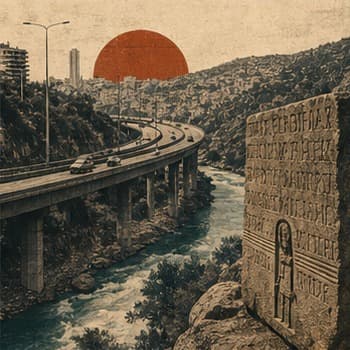
At Nahr el-Kalb in 2026, the inscriptions still do what weak states are afraid of. They remember. This page gathers the work behind my heritage and cultural strategy profile: the Identity Capital Index, Beirut Waterfront Park, Levantine material memory, Gulf heritage statecraft, and Lebanese Academic.

For WSP Middle East

What I bring to a heritage team.

In Riyadh, AlUla, Abu Dhabi, Beirut, and Tyre, the buyer is rarely asking for archaeology alone. The buyer is asking how archaeology, conservation, planning, tourism, and public memory become a credible project. My work sits in that space: business development, regional analysis, public writing, and heritage strategy beside technical specialists who do the fieldwork.

$660K

closed across 15 months selling into regulated accounts including Saudi Aramco.

40K

Lebanese Academic followers across public research and analysis work.

23

long-form essays, with a broader archive of 69 briefs and working papers.

2026

heritage and place-strategy work across Beirut, Tyre, Solidere, and Gulf development.

A notebook map with field notes and drawn routes.
01 / Method

Identity Capital Index

In Beirut in 2025, I began formalizing the Identity Capital Index as a way to assess how heritage, memory, public space, cultural continuity, belonging, and social trust affect the value and resilience of a place. The point is simple. A street, park, district, museum, or cultural asset can be technically built and still feel empty if nobody recognizes themselves inside it.

  • Assesses memory, public use, material honesty, local recognition, and long-term value.
  • Designed for streets, neighborhoods, public spaces, heritage assets, and cultural districts.
  • Turns abstract authenticity into audit language a client, planner, or developer can act on.
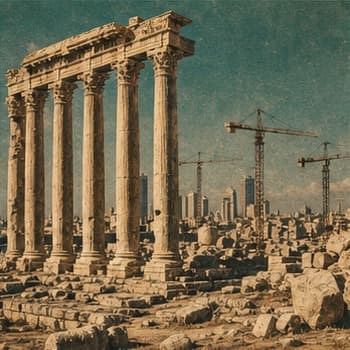
Archaeological stonework near construction cranes.
02 / Case study

Beirut Waterfront Park

At the Beirut waterfront in 2026, the question was not whether a park could be pretty. The question was whether Solidere could build a place that remembered Beirut instead of importing another polished surface from nowhere. The proposal used Roman fragments, local stone, Proto-Aeolic references, an Adonis Grove, a pigeon tower, civic rituals, and maintenance logic as parts of one public argument.

  • Roman fragments and stored archaeological material treated as public assets.
  • Local stone, native planting, and vernacular forms used as governance choices.
  • Public-space economics connected to dwell time, maintenance, stewardship, and place value.
An inscription wall by the Dog River in Lebanon.
03 / Research shelf

Levantine Heritage Research

At Nahr el-Kalb, at Faqra, in Tyre, and in the old arguments over Phoenician and Canaanite identity, Lebanon keeps leaving evidence in stone and then pretending the evidence is too dangerous to read. My Lebanese Academic work has followed those threads through Adonis and Ashura mourning traditions, civil-war memory, artifact looting, and the long fight over whether Lebanese identity has to remain trapped inside sectarian categories.

  • Phoenician and Canaanite continuity, Ugaritic context, and Lebanese identity beyond sect.
  • Adonis, Christian Holy Week, and Ashura read as living forms of inherited grief.
  • Robert Fisk, artifact looting, private collections, and the politics of material memory.
Ancient stone remains in the Lebanese mountains.
04 / Gulf frame

Heritage and Nation-Building

In AlUla, Diriyah, Abu Dhabi, and the Saudi giga-projects after Vision 2030, archaeology is not a decorative department. It is part of how a state explains itself, attracts visitors, reassures investors, and moves from resource wealth into civilizational language. Heritage business development has to speak to tourism authorities, developers, ministries, planners, curators, and engineers at the same time.

  • AlUla and Diriyah understood as heritage, tourism, identity, and state strategy.
  • Gulf clients often buy meaning, legitimacy, visitor economy, and method at the same time.
  • WSP's archaeology, conservation, planning, environment, and urban teams need that argument translated for buyers.
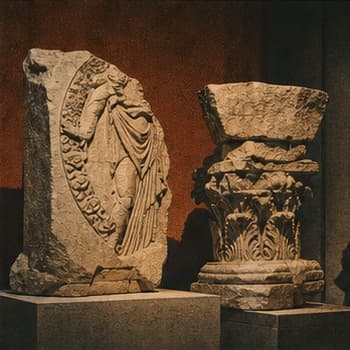
Museum stones and archival objects arranged under soft light.
05 / Public authority

Lebanese Academic

Lebanese Academic is the public proof. From Beirut in 2025 and 2026, I built a 40,000-follower research platform on Lebanese political economy, historical memory, sectarian governance, urban reconstruction, and cultural identity. I have written long-form essays, maintained research briefs, and appeared on Al Jazeera English to discuss Lebanon's sectarian system and institutional design.

  • 40,000 followers across public research and analysis work.
  • 23 long-form essays and a broader archive of 69 briefs and working papers.
  • Al Jazeera English commentary on Lebanese sectarianism and institutional design.
Application packet

For the hiring reader.

In WSP language, the archaeologist in the trench remains central. My work is beside that person: find the right client, explain the value of the work, write the argument, and carry the project across the room from technical method to institutional decision.

Read the essay archive ->