
Lebanese Academic / الأكاديمي اللبناني
The country, not the crisis.
The country, not the crisis.البلد، لا الأزمة.Beirut · Levant · Diasporaبيروت · المشرق · المهجر

Publishing writing that decodes power and preserves memory.

نُصدِر كتابةً تُفكّك السلطة وتصون الذاكرة.

Essay

Downtown Without a City

Beirut's postwar center solved the problem of visible ruin while leaving ordinary citizens outside the place built in their name.

Rafic Hariri is difficult to judge because he built something. That fact makes the argument about downtown Beirut harder than the usual anti-corruption sermon. He did not only steal, privatize, centralize, or distort. He also looked at a ruined city center and imagined cranes where others saw paralysis. He understood that postwar Lebanon needed a stage on which to tell itself the war had ended.

The problem is the stage he built. Downtown Beirut was reconstructed as an address for capital and a substitute for civic memory. It was cleaned, paved, regulated, polished, securitized, branded, and priced beyond the social life that once made it a center. The old souks had been messy, mixed, commercial, intimate, noisy, and porous. The new center became elegant and vacant in the specific way privatized public space often is: visually impressive, socially thin.

Solidere converted the city's wound into a real-estate instrument and called the result recovery.

I.The Souk as Memory Machine

A souk remembers in ways a mall cannot. It remembers through repetition: the shopkeeper who knows the family, the route a worker takes after payday, the shortcut between quarters, the smell of spices and damp cloth, the argument over price, the balcony above the storefront, the religious and class mixture produced not by ideology but by need. People who would never attend a coexistence conference meet at the same counter because the city makes them.

The old Beirut souks were not a utopia. They were unequal, crowded, patriarchal, contested, and embedded in the social hierarchies of their time. But they were urban in the deep sense: they produced encounter. Their destruction during the civil war was not only architectural. It severed habits of shared use. The reconstruction could have treated that loss as the central problem. Instead, it treated war damage as an opportunity for comprehensive redesign.

The new downtown preserved fragments of heritage while replacing the social ecology that gave heritage meaning. Facades remained. Routes changed. Ownership changed. The scale changed. The user changed. The city center became a place Lebanese could visit but no longer politically own.
II.The Private Republic

Solidere's genius was juridical as much as architectural. A private real-estate company was granted extraordinary authority over the reconstruction of the Beirut Central District. Property rights were transformed into shares. Former owners and tenants were compensated through instruments many could not afford to hold. The public interest was reimagined through the balance sheet of a company tasked with rebuilding the symbolic center of the republic.

The human cost of that juridical transformation is easy to flatten into policy language. Expropriation, compensation, shareholding, redevelopment: the words are clean. The experience was not. A shopkeeper who had inherited a place in the souk did not lose only square meters. He lost customers, routines, neighboring trades, informal credit, a route through the day, and the right to recognize himself in the center of the city. Compensation can price property. It struggles to price belonging.

The Lebanese model appears in miniature. The state fails, or is made to fail. A private substitute appears. The substitute becomes indispensable. The substitute then acquires public authority without public accountability. Citizens are told to be grateful because something is finally being done.

That gratitude is politically disciplining. Once the public has accepted incapacity as the baseline, any visible private capacity becomes almost immune from critique. The question shifts from "who has the right to remake the city?" to "would you rather keep the rubble?" This is the blackmail of reconstruction in a failed public order: accept dispossession because the alternative is paralysis.

Hariri's defenders argue that without this model, downtown would have remained rubble for decades. They may be partly right. That is what makes the critique serious. Lebanon's state was weak, broke, and paralyzed. The private vehicle had capacity. It produced roads, infrastructure, restored buildings, and an internationally legible city center. Solidere did something; the harder question is what kind of city its doing produced, and who was removed from the answer.

The rebuilt center solved the problem of visible ruin by creating a subtler absence: the absence of ordinary citizens from the place that was supposed to symbolize national recovery.

III.Memory Without the War

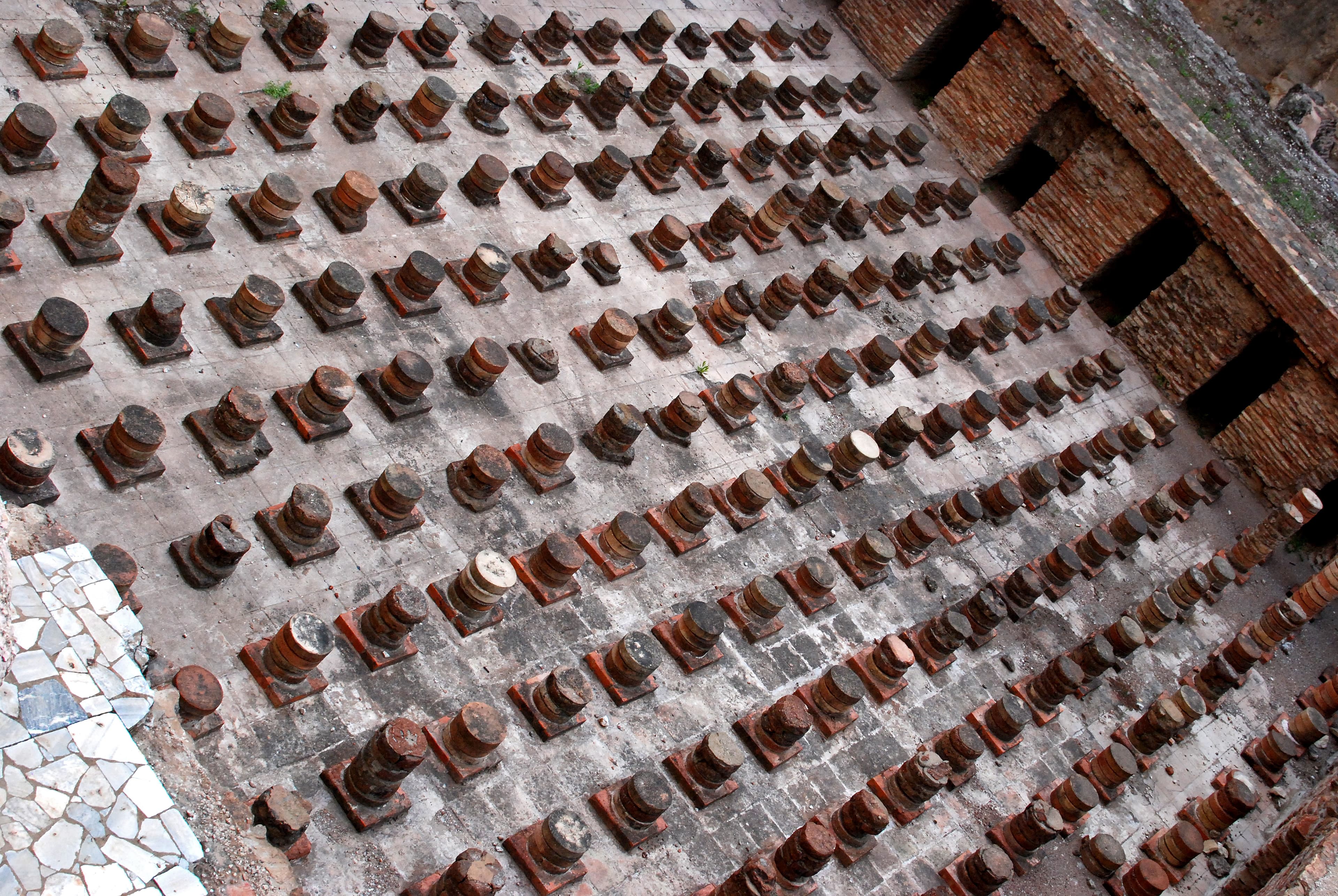
Postwar downtown Beirut also demonstrates Lebanon's larger refusal to remember the civil war publicly. Reconstruction made archaeology visible while making recent violence strangely absent. Ancient columns could be displayed because they did not accuse anyone currently in parliament. The Roman layer was safe. The war layer was dangerous.

Heritage can become a method of forgetting. A city may lovingly preserve a column while refusing to mark a massacre, curating memory away from accountability. The deeper past becomes a neutral alibi for evading the recent past. Everyone can agree on Rome. Not everyone can agree on who shelled the street.

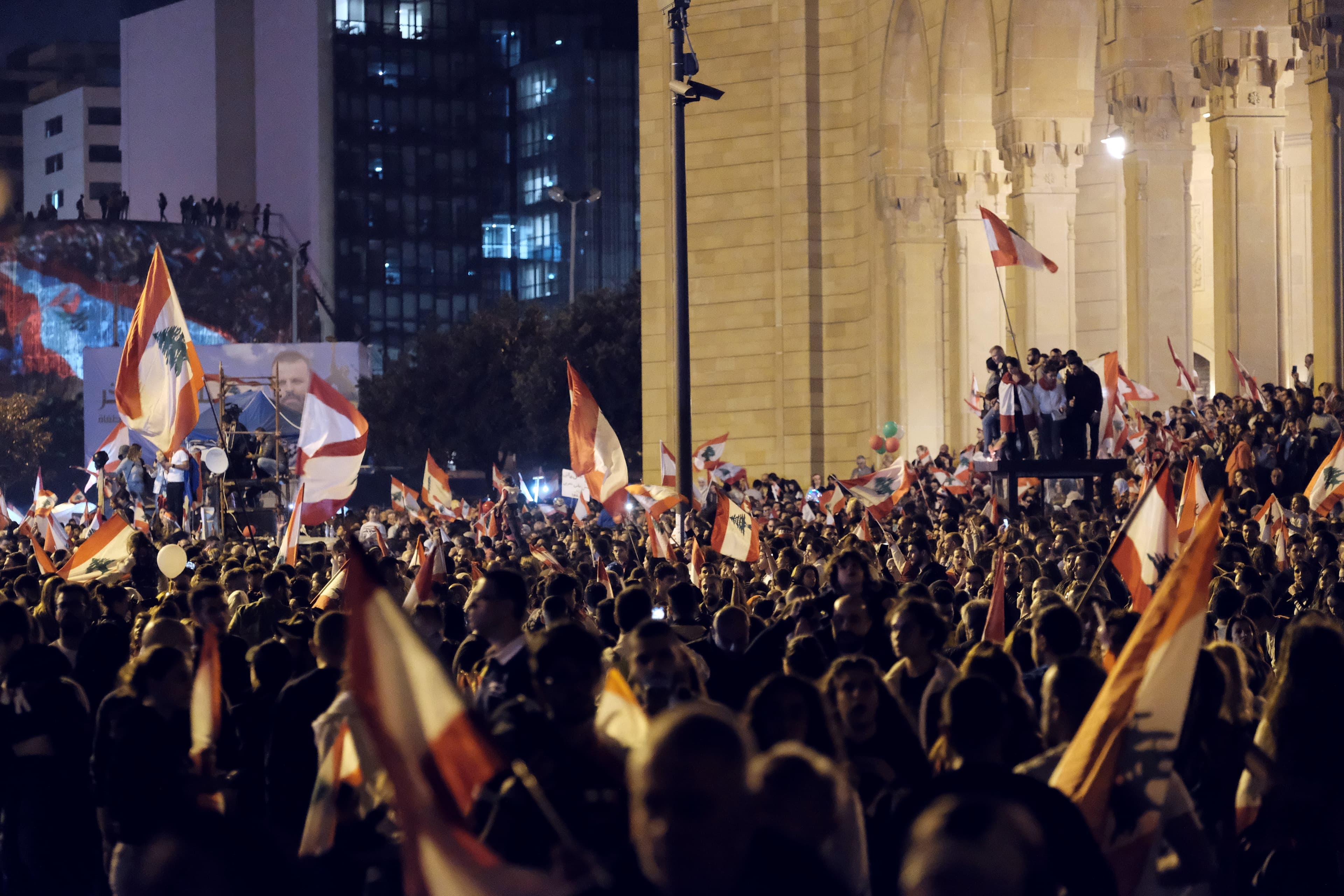
The port explosion tore through this arrangement with obscene clarity. Here was Beirut again wounded by the union of negligence, corruption, institutional hollowing, and impunity. The World Bank estimated billions in damages and losses after the blast. Neighborhoods outside the polished center - Gemmayzeh, Mar Mikhael, Karantina - absorbed the violence with the fragile intimacy of lived city fabric. Volunteers arrived before the state. Residents swept glass from apartments before officials could agree on responsibility. Once again, Beirut's social body performed the state the state could not perform.

The blast also revealed which parts of Beirut still had a city under the architecture. People knew which elderly neighbor lived alone, which staircase had collapsed, which cafe could become a supply point, which architect could assess damage, which diaspora cousin could wire money, which volunteer group had lists. The response was chaotic, uneven, and exhausted, but it was urban in a way the polished center often is not. It moved through relationship.

The cruel comparison is plain: downtown had infrastructure without intimacy; the blast neighborhoods had intimacy without protection. A real city needs both.

IV.The City Citizens Need

The argument against Solidere asks for something more serious than nostalgia for brokenness. Ruins are not better than reconstruction, capital can have a role in rebuilding, and old souks should not be embalmed for romantic consumption. But a city center carries more than development value. It is the spatial form of citizenship.

A real downtown should let the poor pass without feeling they are trespassing. It should allow political assembly without becoming a security exception. It should contain memory of the war without turning memory into sectarian accusation. It should preserve archaeology without using antiquity to erase living claims. It should host commerce without making consumption the price of belonging. It should be governed by public authority answerable to residents, workers, shopkeepers, visitors, and future generations.

Beirut received a downtown without a city: a center whose surfaces were restored faster than its social contract, a capital district where the absence of the public was disguised by the presence of stone.

This matters beyond Beirut because Lebanon's whole postwar order was a Solidere logic. Privatize the wound. Financialize the repair. Replace public authority with elite capacity. Call the result reconstruction. Then wonder why the rebuilt thing feels haunted.

Nostalgia will not repair the city. Restitution might: legal, spatial, archival, social. Beirut needs public squares that are truly public, rent structures that permit ordinary life, memorials that name the war, museums that explain the layers without laundering the present, and planning that begins from citizens rather than investors.

Beirut was never only beautiful. It was usable. That is what must be recovered.

Notes and Sources
  1. 1

    AUB ScholarWorks, "Merchants and memory: remembering the old Beirut Souqs": https://scholarworks.aub.edu.lb/handle/10938/10243?show=full

  2. 2

    "Neoliberal Phoenix: The Contested Legacy of Solidere's Post-War Reconstruction of Beirut Central District," MDPI, 2026: https://www.mdpi.com/2413-8851/10/4/184

  3. 3

    ScienceDirect, "Reconstructing space, re-creating memory: sectarian politics and urban development in post-war Beirut," 2002: https://www.sciencedirect.com/science/article/pii/S0962629802000173

  4. 4

    World Bank, Beirut Rapid Damage and Needs Assessment press release, August 2020: https://www.worldbank.org/en/news/press-release/2020/08/30/beirut-explosion-decisive-action-and-change-needed-to-reform-and-rebuild-a-better-lebanon

  5. 5

    World Bank Beirut RDNA Q&A: https://www.worldbank.org/en/news/factsheet/2020/08/30/qa-beirut-rapid-damage-and-needs-assessment-august-2020

  6. 6

    Saree Makdisi, "Laying Claim to Beirut: Urban Narrative and Spatial Identity in the Age of Solidere," Critical Inquiry.

  7. 7

    Local research archive: `RESEARCH/analysing_lebanese_politics_structurally.md`; `RESEARCH 2/BEIRUT_PARK_VIRAL_REPORT.md`; `RESEARCH/canaanite_seated_deity_statue_identification.md`.